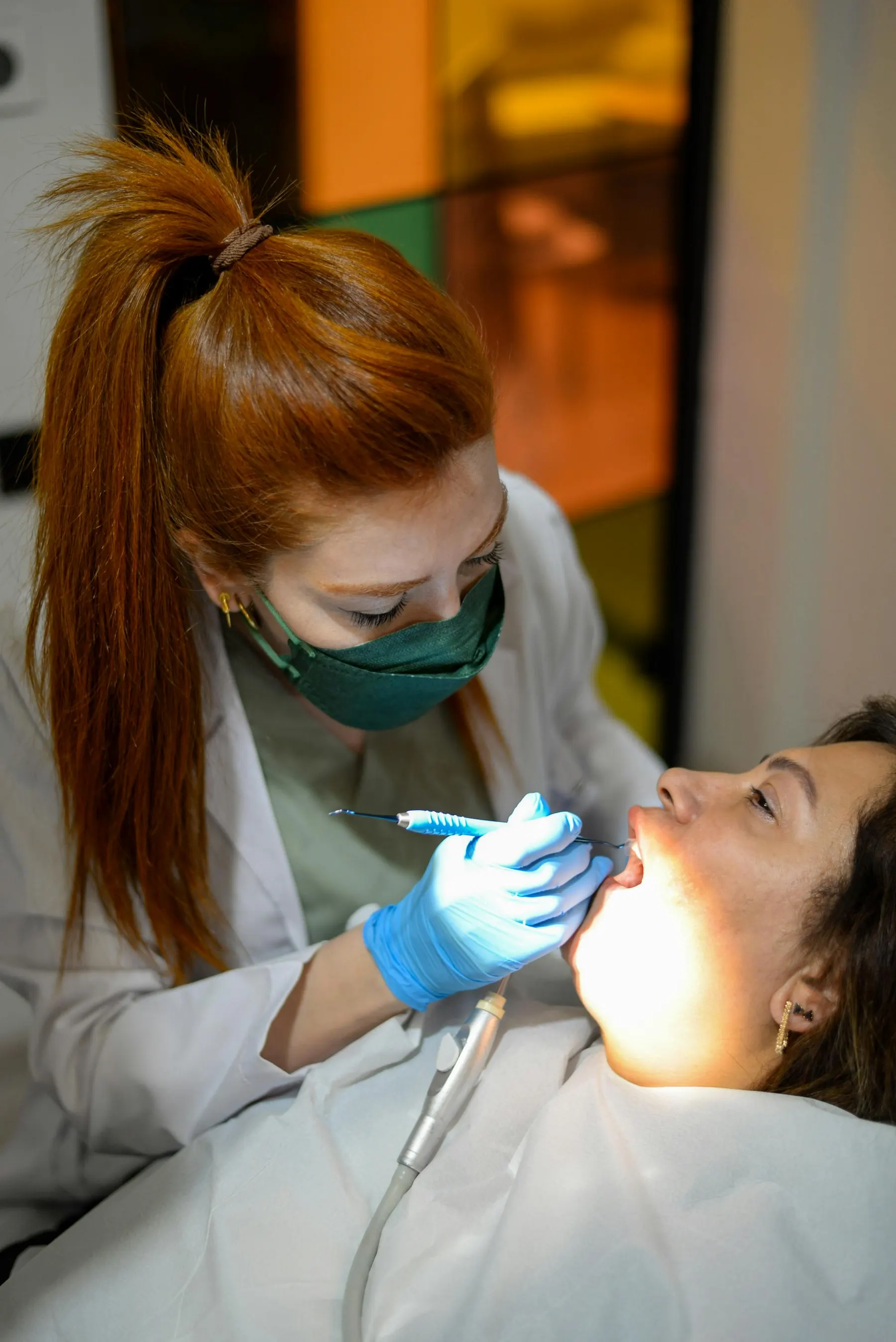
A single implant is not one visit and not three months. It is a careful sequence of three or four appointments spread across three to six months — and that pace is what makes it last.
A dental implant replaces a missing tooth from the root up. It looks like a real tooth, functions like a real tooth, and — when done well — is built to last for many years. It is also a significant piece of work, and worth understanding before you commit. Here is the honest walkthrough.
What an implant actually is
Three parts, working together:
- The implant itself — a small titanium (or zirconia) screw, usually 8-15mm long, placed into the jawbone where the tooth root used to be.
- The abutment — a small connector that screws into the top of the implant and protrudes through the gum.
- The crown — the visible "tooth" that attaches to the abutment, custom-made to match your other teeth.
The implant fuses to the bone in a process called osseointegration, which takes about three months. Once fused, it functions like a tooth root and will last for many years.
Who implants are right for
Implants work well for:
- A single missing tooth where the neighbouring teeth are healthy and you would rather not file them down for a bridge.
- Multiple missing teeth that need separate replacements (or a small bridge supported on two implants).
- A full arch that is currently a denture — implants can either anchor a removable denture or support a fixed full-arch prosthesis.
You need:
- Enough bone to hold the implant. If bone has shrunk after a long-missing tooth, a graft may be needed first.
- Healthy gums with no active gum disease.
- General good health — uncontrolled diabetes, heavy smoking, and some medications affect healing.
- Time and patience — implants are not quick.
The step-by-step process
Step 1: Planning (1-2 visits)
A consultation, photographs, a 3D CBCT scan to map your bone and the position of nerves, and an impression of your bite. We design the final crown digitally before any surgery, so we know exactly where the implant needs to sit. We discuss the timeline, the cost, and the alternatives.
Step 2: Placement (1 visit, 60-90 minutes)
The implant is placed in the jawbone under local anaesthetic, usually in a single appointment per implant. Most patients describe it as feeling like a tooth extraction — pressure but no pain. We can offer conscious sedation for patients with anxiety.
You go home with a small surgical site that takes about a week to settle. Soft foods for the first few days, prescription pain relief if needed, and no strenuous exercise for 48 hours.
Step 3: Healing (3-6 months)
This is the longest part of the process, and there is no shortcut. The bone needs to grow around and fuse to the implant. During this time, you wear a temporary crown or bridge so the gap is not visible.
- 3 months for a lower jaw implant in good bone.
- 4-6 months for an upper jaw implant or any case requiring a bone graft.
We see you once during this period for a quick check.
Step 4: Abutment and final crown (2 visits, 2-4 weeks apart)
When healing is complete, we attach the abutment and take a final impression. The crown is custom-made in our lab and fitted at the next visit. From the day it goes on, you eat normally.
What it feels like, honestly
- Day of surgery: Numb, then a few hours of mild discomfort as the anaesthetic wears off. Most patients take one or two doses of paracetamol or ibuprofen and that is it.
- Days 2-5: Mild swelling, a soft diet, no real pain.
- Week 2 onwards: You forget the implant is there. Most patients return to normal eating, exercise and travel within ten days.
- Months 3-6: Nothing to feel. The healing is invisible.
What to watch for after placement
Call us promptly if:
- Pain gets worse rather than better after day three.
- Swelling spreads beyond the immediate area or you develop a fever.
- You see discharge from the surgical site.
- The temporary crown comes loose or the implant feels mobile.
These are uncommon — but easier to fix when caught early.
Aftercare for the long term
A well-cared-for implant lasts for many years. The maintenance is the same as a real tooth, with two specifics:
- Brush twice a day, floss once a day. Floss carefully around the implant — the gum seal is the implant's main defence against infection.
- Come for a cleaning every six months. We use specific instruments designed not to scratch the implant surface.
- Avoid using the implant tooth as a tool — opening bottles, biting fingernails, chewing on pens. Crowns are strong but not indestructible.
If you have been living with a missing tooth, the consult costs you nothing but an hour. We will tell you whether an implant is the right move, what the alternatives are, and what the realistic timeline and cost look like for your specific case.
End